










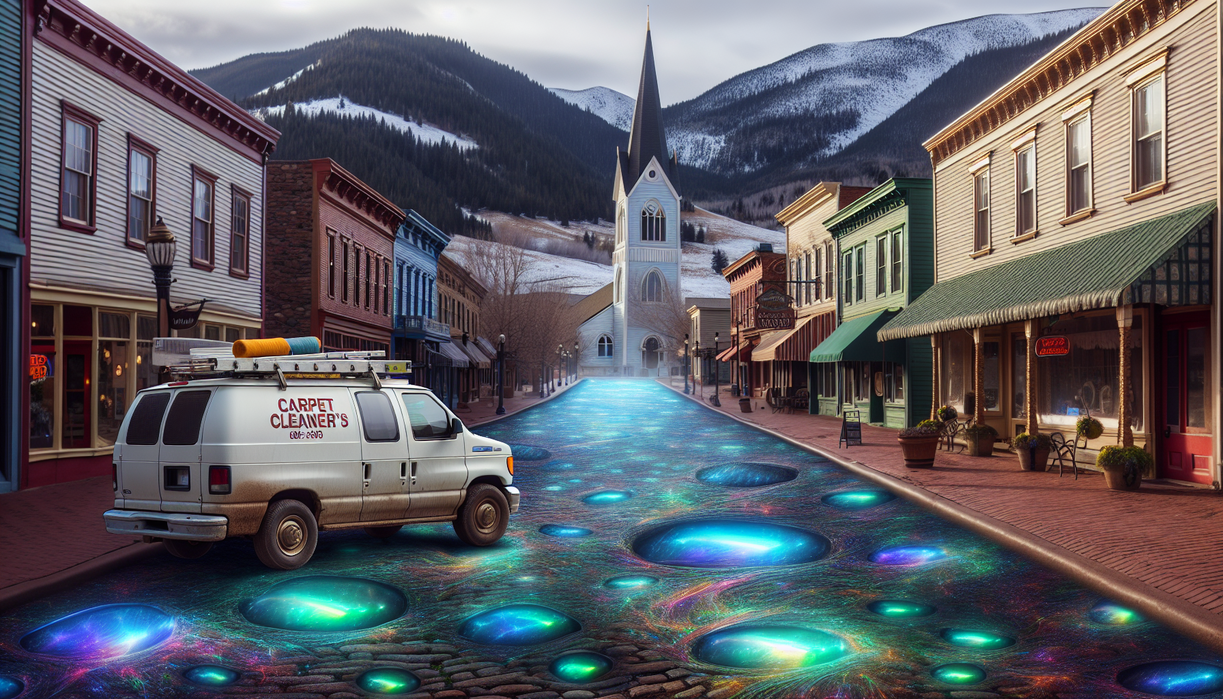
www.twotwoart.com – Independent filmmakers love to talk about gear, budgets, and box office hopes, yet the most powerful tool they wield is content context. When a story’s setting, subtext, and tone all lock into place, even a film made on a shoestring can feel rich. That is exactly what happens in the Colorado horror indie about a small-town carpet cleaner who discovers those mystery stains are not coffee spills but alien entities pushing up from below.
This odd premise sounds almost like a joke, yet it reveals how content context can transform cheap locations and limited effects into an unsettling experience. The film leans into familiar carpets, strip malls, and western skies, then twists expectations until audiences see every dark smudge on the floor as a possible portal to something hungry.
Low Budget, High Concept: Why Content Context Matters
On paper, there is nothing glamorous about a carpet cleaner as a horror lead. No ancient prophecy, no cursed mansion, just a guy with a van and a schedule. Yet this unremarkable job becomes the ideal content context for creeping dread. Carpets soak up life: spilled drinks, pet messes, secrets that nobody wants to scrub too closely. When those stains start to move on their own, the film turns everyday grime into a threat.
Colorado’s small-town environment further shapes that content context. Instead of anonymous city streets, we get tight-knit neighborhoods, local diners, and customers who chat about weather while something unseen pulses under their living room rug. Familiarity becomes a trap. The more normal the surroundings appear, the more jarring it feels when alien life creeps through the fibers at our feet.
Budget restraints force the director to focus on implication rather than spectacle. You rarely see the creatures in full; you see wet shadows, bulging carpet, and nervous glances. This approach shows how content context can replace expensive CGI. Suggestion, framed by a believable world, generates stronger fear than a fully revealed monster with a glossy digital sheen.
Colorado as Character: Mountains, Main Streets, and Monsters
Many horror films could take place anywhere, but this story leans on Colorado so heavily that the state becomes part of the content context. Wide shots of snow-dusted peaks create a sense of isolation. Small towns feel like islands, separated by miles of highway. When something invasive appears beneath the carpet, escape is not a quick option. You cannot just move across town; you face long drives through open country with who-knows-what in the van.
There is also a playful tension between Colorado’s outdoor image and this indoor nightmare. Tourism brochures flaunt hiking trails and golden aspens. This movie, instead, gives us basements, cramped hallways, and stained rental units. The contrast becomes a running joke inside the content context. The hero spends his days hunched over grimy floors while the horizon brags about freedom and fresh air outside his van window.
From my perspective, this choice feels smarter than chasing postcard beauty. Horror thrives on the places we overlook. Main Street shops, discount motels, beige apartments with ancient carpet squares—these become stages where the content context tells us that horror hides not only in remote cabins but right beneath our soles, in material we step on without a second thought.
The Quirky Heart of a Carpet-Cleaning Hero
What really sells this film, beyond scenery and slime, is the protagonist’s offbeat humanity. His awkward jokes, half-failed business, and stubborn pride provide emotional content context that balances the scares. When he first encounters a pulsing stain, he treats it like a tough job he can upcharge, not an invasion. That reaction rings true for anyone who has hustled for work. Watching him stumble from mild irritation into cosmic horror, we laugh, recoil, then oddly root for him to send an invoice to the universe.