









www.twotwoart.com – Todd Howard has finally confirmed a crucial detail about The Elder Scrolls 6: it will “most definitely” feature more trees than Skyrim across all planned platforms. On the surface, that sounds like a light joke about foliage density, yet for lore-obsessed fans it instantly becomes fuel for speculation about where this long-awaited RPG will take place. More trees on next‑generation platforms could signal lush forests, deeper ecosystems, and a clear break from the harsh, snowy landscapes many of us roamed for thousands of hours.
Once you hear “more trees,” it is almost impossible not to picture Valenwood, the dense, living homeland of the Bosmer. Suddenly, my mental conspiracy board for Elder Scrolls 6 locations has a new centerpiece, pinned between old rumors about Hammerfell deserts and High Rock coasts. Bethesda still refuses to lock down platforms publicly beyond vague references, yet the combination of expanded foliage, better hardware, and Howard’s playful hints might reveal more than expected. Let’s break down what these trees could mean for platforms, tech, and Tamriel’s future.
More Trees, More Power: What This Means for Platforms
When Howard talks about more trees, he is really talking about more power across current platforms. Skyrim pushed the Xbox 360 and PS3 harder than many realized. Forests had to stay relatively simple, draw distances conservative, and weather effects restrained so those older platforms could cope. With Elder Scrolls 6, Bethesda can finally design dense woods and layered canopies for modern platforms without stripping away detail to keep frame rates stable.
Modern platforms allow heavy use of procedural foliage, complex lighting, and richer physics simulations. Imagine leaves reacting dynamically to spells, wildlife moving through undergrowth instead of along obvious paths, plus distant treelines staying crisp instead of dissolving into fog. On previous platforms, these ambitions had to be cut back or faked. Now, hardware such as high‑end PCs and current consoles opens the door for forests that feel alive rather than decorative.
Howard’s comment also quietly reassures fans worried about large-scale ambition. Expansive forests demand CPU and GPU bandwidth across all platforms. If Bethesda feels confident enough to promise more trees publicly, they likely trust their engine upgrades and optimization strategy. That statement becomes a subtle pledge: Elder Scrolls 6 will not shrink in scope for weaker platforms but instead push them with smarter streaming, better LOD systems, and more efficient rendering.
Is Elder Scrolls 6 Secretly Pointing to Valenwood?
The idea of Valenwood has haunted Elder Scrolls forums for years, yet this talk of trees across new platforms gives those theories fresh life. Valenwood is almost defined by its forests. Cities grow upon giant walking trees, Bosmer follow the Green Pact, and nature feels almost sentient. A game set there could justify huge investments in foliage technology across all platforms. Every hill, valley, and horizon line would demand intricate arboreal detail.
Contrast that with Hammerfell, another fan-favorite guess, usually imagined as arid coasts, cliffs, and deserts. Forests exist there, yet they are not the star of the show. High Rock offers mountains and temperate woods, though the region feels more fragmented, more political. When Howard leans into jokes about trees, Valenwood rises toward the top of my location board. Even across different platforms, a thick, magical forest sets a coherent visual identity much stronger than generic plains or repeated snowfields.
Of course, Bethesda loves hybrid settings, so we could still see overlapping provinces or border territories. Maybe a slice of Valenwood edges into neighboring lands, letting the studio showcase multiple biomes across platforms without locking itself to a single province. Still, if the game opens on a towering graht-oak, stretching across next‑gen platforms with roots burrowed into the new engine, I will happily admit the forest clues were there all along.
How Platforms Shape Forests, Exploration, and Story
Forests are more than scenery; across powerful platforms they become systems that influence exploration, stealth, survival, and storytelling. Denser foliage can hide enemies, guide players along natural paths, or obscure secrets without obvious markers. Advanced platforms let AI use trees as cover, sound design echo through canopies, and dynamic weather alter visibility. If Elder Scrolls 6 leans into that idea, we might see quests where the forest itself behaves like a character, reacting to player choices, reshaping travel routes, or whispering lore through ambient events. My personal hope is a Tamriel where platforms no longer limit the dream of a living wilderness; instead, rich hardware finally empowers Bethesda to make forests, swamps, and glades feel mysterious, dangerous, and sacred.
From Skyrim’s Pines to Next‑Gen Forests
Looking back at Skyrim across its many platforms, it is astonishing how iconic those simple pines became. They lined the roads to Riverwood, framed dragon battles above Whiterun, and created that crisp northern feel despite technical limitations. Yet once you step off nostalgia road, it becomes clear how sparse those trees really were. On weaker platforms, Bethesda often had to thin forests so performance stayed tolerable, which left some valleys feeling oddly empty.
Modern platforms open the door to a different philosophy. Rather than a few dozen trees repeating their models, Elder Scrolls 6 can embrace diversity. Twisted roots, fallen logs, mossy trunks, poison-shrouded groves, plus bioluminescent undergrowth after sundown. These details require memory and computation across all platforms. They also build atmosphere, inviting slower exploration where every clearing matters. Players can track creatures via broken branches, find hidden shrines behind vines, or simply stop to watch moonlight scatter across drifting spores.
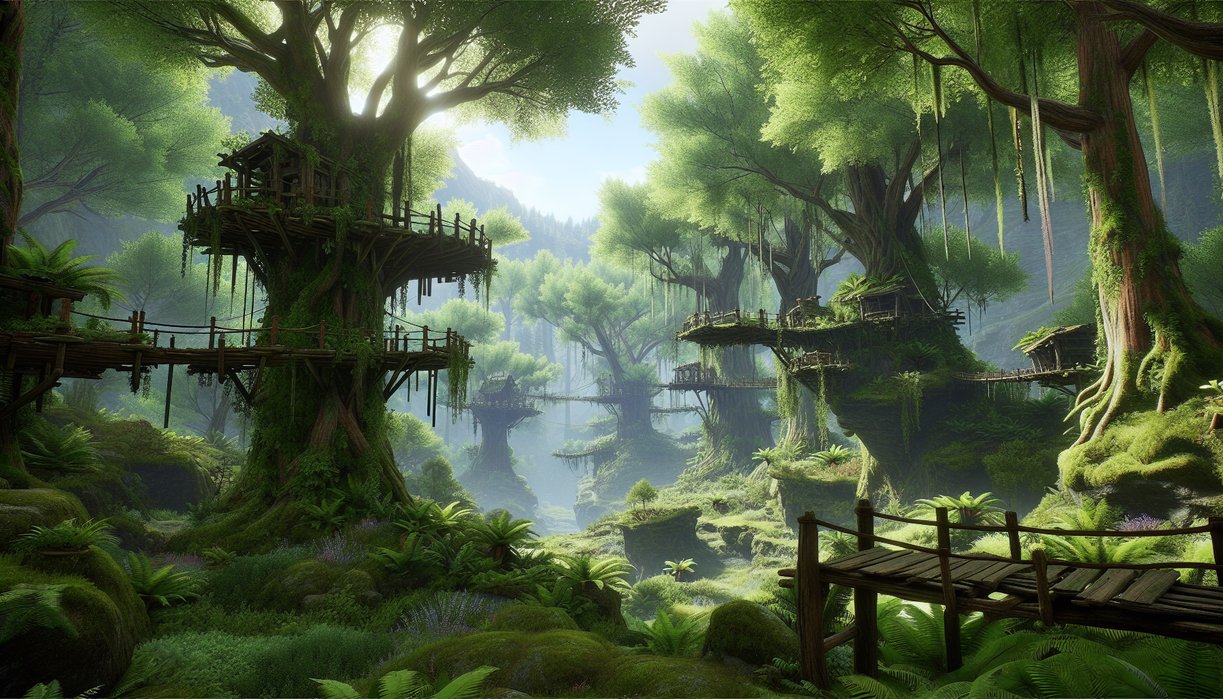
Technical progress across platforms also enables verticality. Skyrim’s forests felt mostly two-dimensional: trunks below, sky above, not much interplay. New hardware allows thick canopies, climbing, gliding, even aerial predators nesting high above. If Bethesda leans into a forest-heavy setting, those upper layers turn forests into multi-level dungeons under open sky. Treehouses, rope bridges, unstable branches, and secret routes for nimble characters would create a sense of depth older platforms simply could not manage.
Platforms, Performance, and the Creation Engine’s Next Leap
It is impossible to talk about forests across platforms without mentioning tech. Bethesda’s Creation Engine carried both Skyrim and Starfield, each time reworked for new goals. For Elder Scrolls 6, more trees suggest heavy investment in streaming, occlusion culling, and smarter LOD. Forests involve countless overlapping assets; without careful design, even powerful platforms begin to stutter. I expect Bethesda to use procedural tools to generate base foliage, then handcraft key locations so every grove tells a story.
Platforms also dictate how far players can see. A thick forest on high-end PCs could stretch for kilometers, with distant trees swaying independently. Consoles might use subtler cheats, like merging distant foliage into clusters or baking some lighting data to save performance. The challenge lies in preserving that feeling of boundless wilderness across platforms so lower-end users still feel immersed instead of boxed in. Consistent art direction often matters more than raw polygon count.
My personal concern centers on bugs. A forest-heavy Elder Scrolls across so many platforms almost guarantees oddities: floating branches, invisible rocks, physics freakouts when a dragon collides with a fragile tree. Bethesda’s history assures some charming chaos. Still, I hope improved tooling and automated testing reduce worst offenders. Dense foliage should create tension and wonder, not frustration when your horse clips halfway through a tree during a crucial escape.
Why More Trees Could Redefine RPG Worlds Across Platforms
If Bethesda delivers on this promise of richer forests across major platforms, Elder Scrolls 6 could quietly reset expectations for open-world RPGs. Trees might sound like minor decoration, yet they influence navigation, pacing, combat, atmosphere, and story tone. A game grounded in living woods makes you move slower, listen harder, and respect unseen forces beyond city walls. For me, the most exciting part of Howard’s comment is not just the meme potential; it is the implication that platforms have finally caught up to a fantasy many of us imagined when we first stepped out of Helgen. Whether we end up roaming Valenwood’s walking trees or some new frontier, I want Elder Scrolls 6 to leave me standing on a forest ridge at dusk, realizing the true protagonist of this generation-spanning saga might be the world itself.