









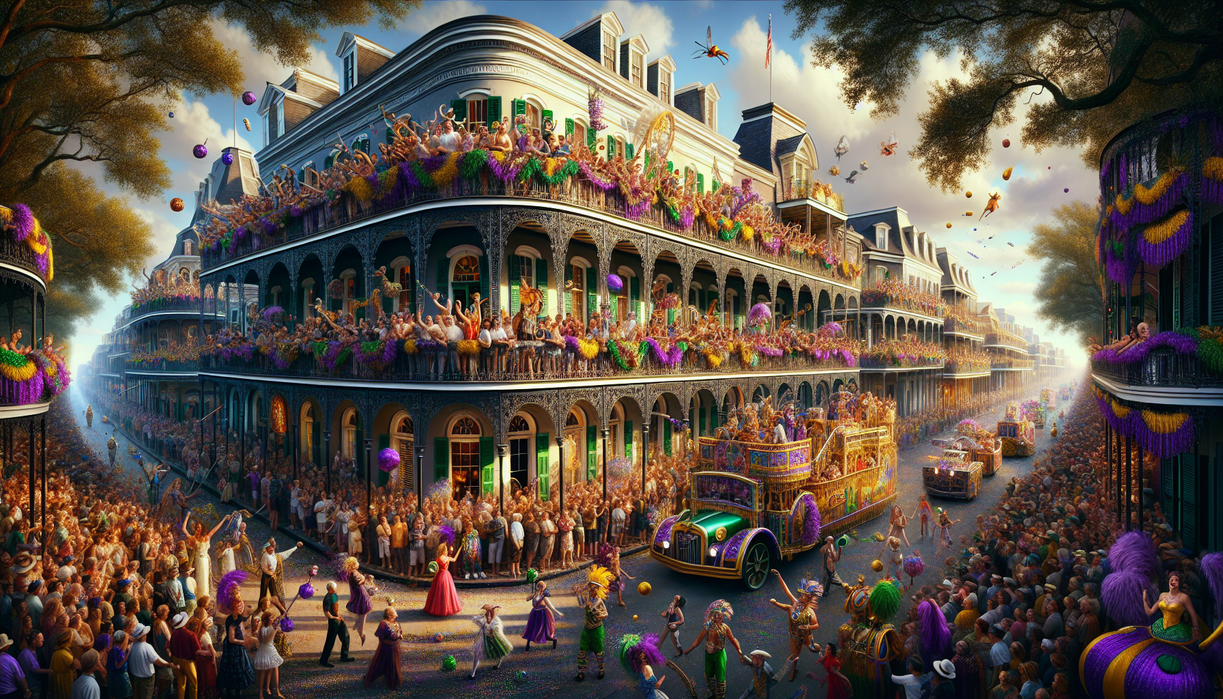
www.twotwoart.com – Mardi Gras in New Orleans is more than a party; it is a living story rich in content context, where every bead, song, and shout holds history. As floats roll past oak trees on St. Charles Avenue, the city reveals its layered identity, from old Creole traditions to modern street culture, all stitched together by music and shared joy.
This year’s celebration shows how content context shapes the experience for locals and visitors alike. Spectators crowd wrought‑iron balconies, calling out familiar chants, while costumed riders answer with armfuls of trinkets. Beneath the glitter lies a narrative about community, faith, indulgence, and release before Lent, turning each moment into a vivid chapter of New Orleans life.
Content Context on the Streets of New Orleans
Walk along historic St. Charles Avenue on Mardi Gras day and the content context hits you instantly. Brass bands drive the parades forward with pounding rhythms. Families camp along the neutral ground with ladders, coolers, and homemade signs. Above, people on balconies lean over iron railings, their voices blending into a chorus that shapes the city’s soundscape.
The famous call, “Throw me something, Mister,” does more than request beads. It signals a ritual exchange, a playful bargain between rider and crowd. That short phrase carries cultural weight, representing hospitality, humor, and the city’s talent for turning strangers into partners in mischief. The content context transforms a tossed trinket into a shared memory.
Each parade krewe adds another layer. Some highlight myth and fantasy, others lean toward satire, poking at politics or local scandals. Floats glide by like moving cartoons. Masked riders remain anonymous, yet their themes reflect real concerns. Through this content context, New Orleans processes joy, frustration, and hope in a form that feels festive, not heavy.
History, Ritual, and the Meaning Behind the Glitter
Without history, Mardi Gras would feel like a random street fair. With history, the content context turns it into an evolving ritual. The season stretches back to colonial Catholic customs, merging with French, Spanish, African, and Caribbean influences. Over time, parades, balls, and masking traditions fused into the Carnival we recognize today.
The timing matters. Mardi Gras marks the climax of Carnival, right before the austerity of Lent. Indulgence, excess, and spectacle make sense only in that content context. People feast, drink, and dance with intention, aware that restraint follows. The city essentially breathes out in a long, joyful exhale before a quieter spiritual inhale.
My own perspective is that this tension between wildness and reverence defines New Orleans at its core. The content context reveals a culture comfortable holding opposites. Sacred mixes with profane, solemn with silly. That duality allows residents to face hardship with resilience. Mardi Gras becomes rehearsal for life’s swings between loss and celebration.
The Balcony View: A Personal Lens on Carnival
From a balcony above St. Charles, the content context feels both intimate and vast. You see children darting to grab beads, elders set up in folding chairs, and tourists wide‑eyed at the spectacle. Yet all follow the same unwritten rules, guided by rhythm, call‑and‑response, and mutual respect. Watching from that height, I sense how Mardi Gras holds together countless stories at once. Noise, color, and movement seem chaotic, but they form a kind of civic heartbeat. In that swirl, the city remembers its past, confronts its present, and quietly imagines its future. The glitter fades, the parades end, yet the reflective conclusion is clear: New Orleans uses Carnival to understand itself, year after year.