








www.twotwoart.com – Movie reviews often circle back to the classics, but few stories attract filmmakers like Emily Brontë’s Wuthering Heights. The latest version, directed by Emerald Fennell, attempts to bottle the novel’s stormy heart in a fresh, provocative way. This review looks at how her film reshapes the raging romance into something tighter, louder, and far more contentious, while questioning what gets lost when a sprawling gothic saga becomes a sleek cinematic package.
In recent movie reviews, Fennell’s adaptation has been labeled messy, playful, and oddly constrained. That tension lies at the center of this piece. I’ll examine how the film reframes Heathcliff and Catherine, why its focus on taboo desire both energizes and flattens the story, and whether this bold, unruly take actually understands the haunted soul of Brontë’s original.
Desire at the Core: A New Angle on a Classic
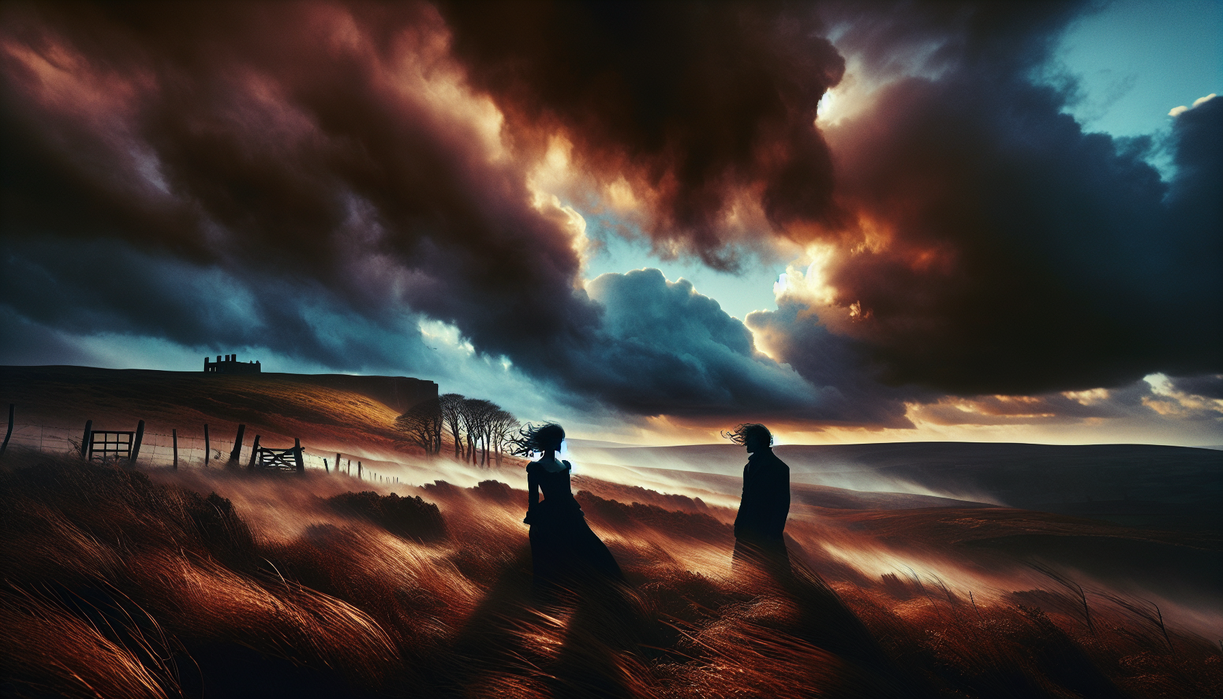
From the opening frames, Fennell signals that this Wuthering Heights will not be another foggy, corseted museum piece. The camera lingers on glances, touches, and near-kisses more than on moors or mansions. For viewers familiar with the novel, this shift is striking. Many movie reviews note that the film strips away subplots to spotlight a single, throbbing theme: desire so intense it threatens to swallow every character on screen.
Heathcliff and Catherine no longer feel like tragic archetypes caught in ancestral curses. Instead, they resemble combustible modern lovers trapped in period clothing. Their chemistry is front-loaded, heavy with physical and emotional charge. In some scenes, the dialogue barely matters; the film lets eye contact and breathless pauses carry the weight. This choice makes the romance immediate, but it also narrows the story’s emotional range.
As a result, the harsh social realities that often shape movie reviews of earlier adaptations slip into the background. Class conflict, inherited trauma, and moral decay remain present but muted. Fennell is far more interested in how forbidden passion fractures every polite surface. That focus creates a hypnotic intensity, though it occasionally feels like watching one powerful note struck again and again, waiting for harmony that never arrives.
Playful Style Versus Gothic Substance
Stylistically, Fennell embraces a mischievous tone that will divide audiences, at least judging by current movie reviews. The film laces gothic melodrama with winks at the viewer: stylized transitions, off-kilter music cues, and staging that borders on theatrical. At times, it feels like a period piece directed by someone raised on music videos and dark comedies. That irreverence keeps the pacing brisk yet risks undercutting the novel’s suffocating dread.
Personally, I found this playful approach both invigorating and frustrating. It frees the story from the heavy, reverential mood that often smothers literary adaptations. Yet the same cheeky energy occasionally trivializes moments that should feel devastating. Scenes of cruelty or heartbreak end with visual flourishes or tonal shifts that pull the emotional rug from under the viewer, leaving a clever impression instead of a bruised heart.
This tension between style and substance runs through many recent movie reviews. Some praise the film’s refusal to worship the source material; others argue it mistakes irony for insight. I lean toward the middle. Fennell’s flair gives the film a distinctive personality, but when the credits roll, I was left wondering whether the story’s gothic core had been hollowed out to make room for experiments in mood and aesthetics.
Is This the Wuthering Heights We Needed?
In weighing this adaptation against earlier versions, my own verdict aligns with several mixed movie reviews: Fennell delivers a bold, sensual, but ultimately incomplete vision. Her focus on taboo desire uncovers raw, electrifying moments, yet compressing the novel into a streamlined tale of obsession flattens its moral complexity. The film succeeds as a provocative conversation piece rather than a definitive retelling. It invites us to reconsider what we want from classic literature on screen: faithful echoes of the original, or daring reinterpretations that risk leaving us unsatisfied. Perhaps the measure of its success lies in this discomfort, forcing viewers to sit with longing, loss, and the uneasy sense that some storms cannot be neatly contained by any single film.