










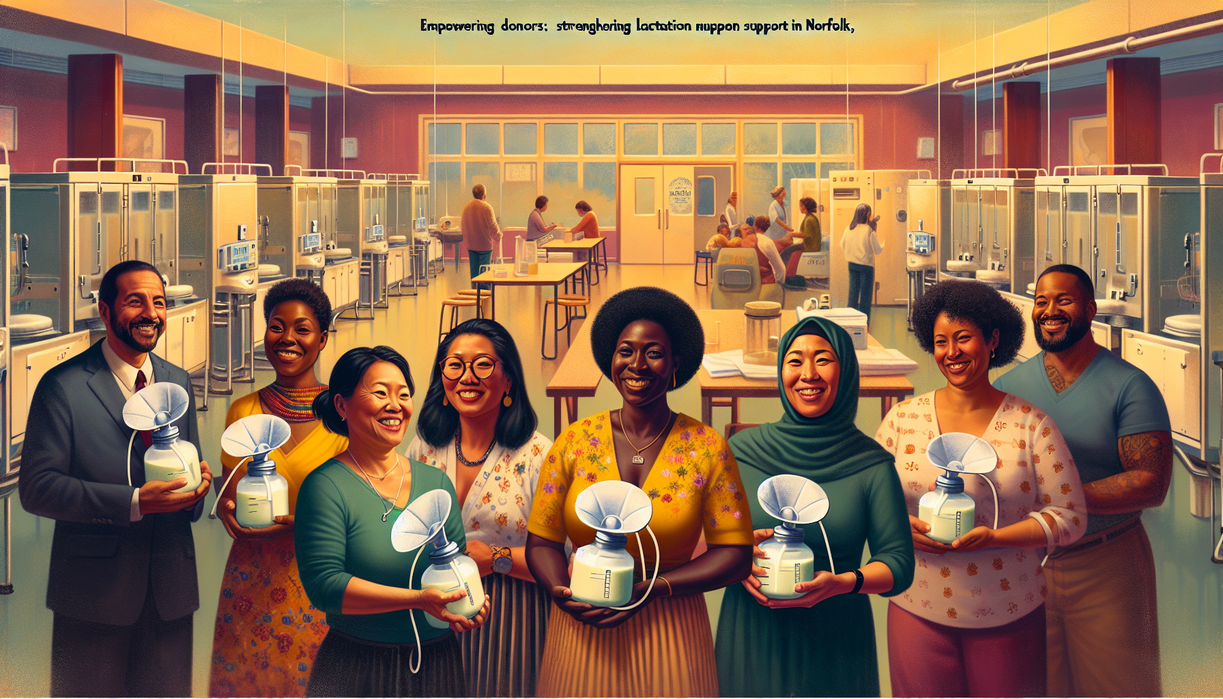
www.twotwoart.com – Across health care & hospitals, quiet revolutions often begin with small, practical tools. One powerful example is the recent donation of wearable breast pumps by Momcozy to The King’s Daughters Milk Bank at Children’s Hospital of The King’s Daughters in Norfolk, Virginia. This gesture may seem simple at first glance, yet it carries major implications for families, clinicians, and the future of lactation support.
When technology, compassion, and community support intersect, health care & hospitals become more humane spaces. A single donation of 50 wearable pumps boosts milk collection, assists donor comfort, and strengthens a fragile chain that links generous parents to vulnerable babies in neonatal care. This story is not just about equipment; it is about reimagining how hospitals help parents care for their children.
How Wearable Pumps Support Modern Milk Banking
Milk banks sit at a vital crossroads inside health care & hospitals. They receive expressed milk from screened donors, then process and distribute it to infants who require extra nutritional protection. Premature babies, infants with complex conditions, or those recovering from surgery often depend on donor milk when their own parent’s supply is limited or temporarily unavailable. Every ounce matters, so any innovation that encourages consistent pumping has real clinical impact.
Traditional pumps can be effective yet frequently tether the user to a wall outlet or chair. That arrangement complicates life for donors juggling work, child care, or medical appointments. Wearable breast pumps offer a more mobile alternative. They slip inside a bra, run quietly, and permit multitasking. For donors participating across health care & hospitals, that freedom often translates into more frequent sessions, higher total output, and reduced stress during already demanding days.
Momcozy’s donation to The King’s Daughters Milk Bank reflects a deeper shift in health care & hospitals: an acknowledgment that supporting families means understanding their real schedules and limitations. Instead of expecting parents to adapt to rigid equipment, hospitals can adapt tools to human lives. In that sense, these wearable devices represent respect for donors’ time, privacy, and physical comfort, all crucial components of sustainable milk donation.
The Ripple Effect Across Health Care & Hospitals
Milk banks exist within a broader ecosystem of health care & hospitals, so a single upgrade often produces ripple effects. When donors receive wearable pumps, they can express milk during commutes, breaks at work, or short quiet moments at home. Increased flexibility encourages long-term commitment to donation. Consistent participation, in turn, stabilizes milk supply for hospital neonatal intensive care units, reducing emergency shortages that force clinicians to rely on formula sooner than they would prefer.
There is also a psychological dimension. Parents who donate milk often feel deep empathy for families inside intensive care units. Many have experienced their own high-risk pregnancies or medically fragile newborns. When health care & hospitals equip them with simple, efficient tools, that empathy transforms into action more easily. Instead of framing donation as an exhausting extra burden, wearable pumps help integrate pumping into everyday routines, leading to a more sustainable, less stressful experience.
From a systems perspective, this donation hints at how private companies can partner responsibly with health care & hospitals. Rather than purely promotional gestures, targeted contributions—like wearable pumps for a milk bank—fill real gaps identified by clinicians and lactation consultants. This kind of collaboration must be guided by ethics, transparency, and patient needs. Yet when done thoughtfully, it can accelerate access to useful technology that public budgets alone might struggle to provide.
Technology, Equity, and a More Human Hospital Experience
My personal view is that small, human-centered devices can help bridge longstanding inequities across health care & hospitals. Wearable pumps reduce logistical barriers for donors who cannot afford to leave work often or who care for multiple children at home. At the same time, babies in intensive care units receive more consistent access to human milk, which research links to lower infection risk and better developmental outcomes. Still, technology is not a cure-all. Real progress requires culturally competent lactation support, informed consent, and fair screening practices in milk banks. When donations like Momcozy’s align with those principles, they help move hospitals away from cold, transactional spaces toward environments where community, kindness, and science work together. In that balance, health care & hospitals become places that not only treat illness but also honor the complex realities of family life.